
Why does eczema flare up in winter — and how can you calm it?
Eczema often worsens during the winter months because the skin is exposed to a perfect storm of environmental stressors. Cold outdoor air contains very little moisture, while indoor central heating further dries the skin, stripping it of essential hydration and weakening the skin barrier.
When this protective barrier is compromised, moisture escapes more easily and irritants can penetrate the skin, triggering inflammation, itching and flare-ups. This is why eczema-prone skin often feels tighter, rougher and more reactive during colder weather.
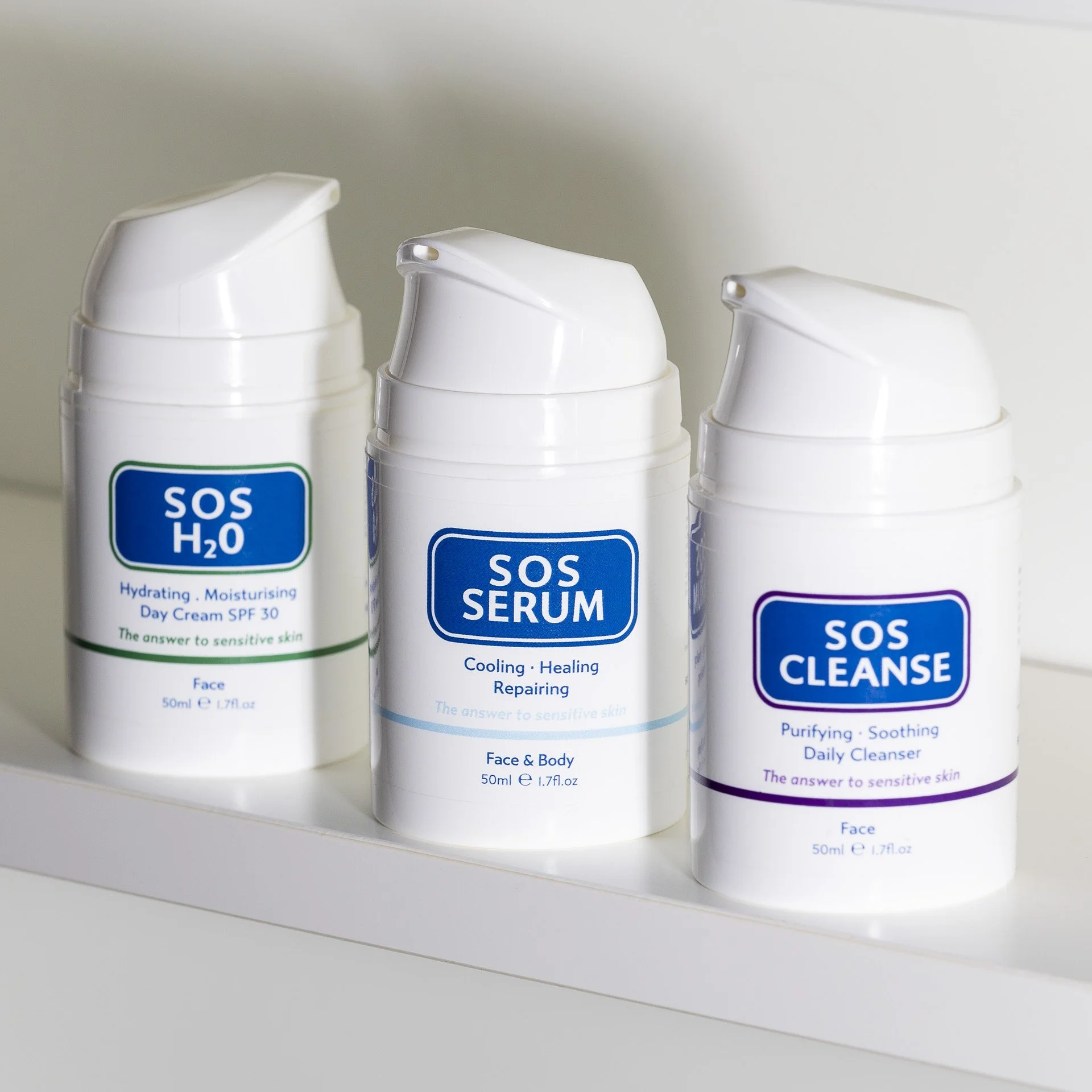
To help calm winter flare-ups, consistency is key. Using a gentle, fragrance-free cleanser, such as SOS Cleanse, helps prevent further disruption to the skin barrier, while avoiding long, hot showers can reduce dryness and irritation. Lukewarm water is always kinder to eczema-prone skin.
Moisturising regularly, particularly immediately after washing, helps to lock in hydration and support the skin’s natural repair process. Rich emollient creams or ointments tend to be more effective in winter than lightweight lotions, as they provide longer-lasting protection against moisture loss. Try SOS Serum, which soothes, hydrates and can reduce the itching associated with eczema. Follow this with SOS H20 Day Cream SPF 30 as a moisture booster and humectant.
It’s also important to minimise everyday triggers where possible. Wearing soft, breathable fabrics like cotton against the skin, using non-biological detergents, and keeping indoor heating at a moderate level can all help reduce irritation.
Most importantly, eczema management isn’t about quick fixes. Supporting the skin barrier daily and responding early to signs of dryness or itching can make a significant difference in preventing flare-ups throughout the winter months.
Look after the skin you are in, it is the only protection available.