
How pool chemicals in particular Chlorine affects the skin - “Pool Face”🏊
Chartered Chemist & Chartered Scientist Bruce Green says "Chlorine is an oxidising chemical, which means it doesn’t just disinfect pool water, it also disrupts the skin’s protective lipid layer. Once that barrier is repeatedly compromised, skin can become dry, tight, flaky, itchy and much more vulnerable to inflammation. I call this the beginning of what many holidaymakers experience as ‘Pool Face’ - skin that suddenly looks tired, rough and dehydrated despite being on holiday.”

"When chlorine exposure is paired with sun, heat, sea salt and increased showering, the skin barrier has very little chance to recover. This is why many people notice that by day three or four of a holiday, their face feels uncomfortable, makeup sits badly and the skin can even sting when applying normal products."
Bruce adds that "chlorine exposure should be treated as a form of chemical stress for the skin, meaning barrier support is essential before and after swimming."
Bruce’s top tips to avoid “Pool Face”:
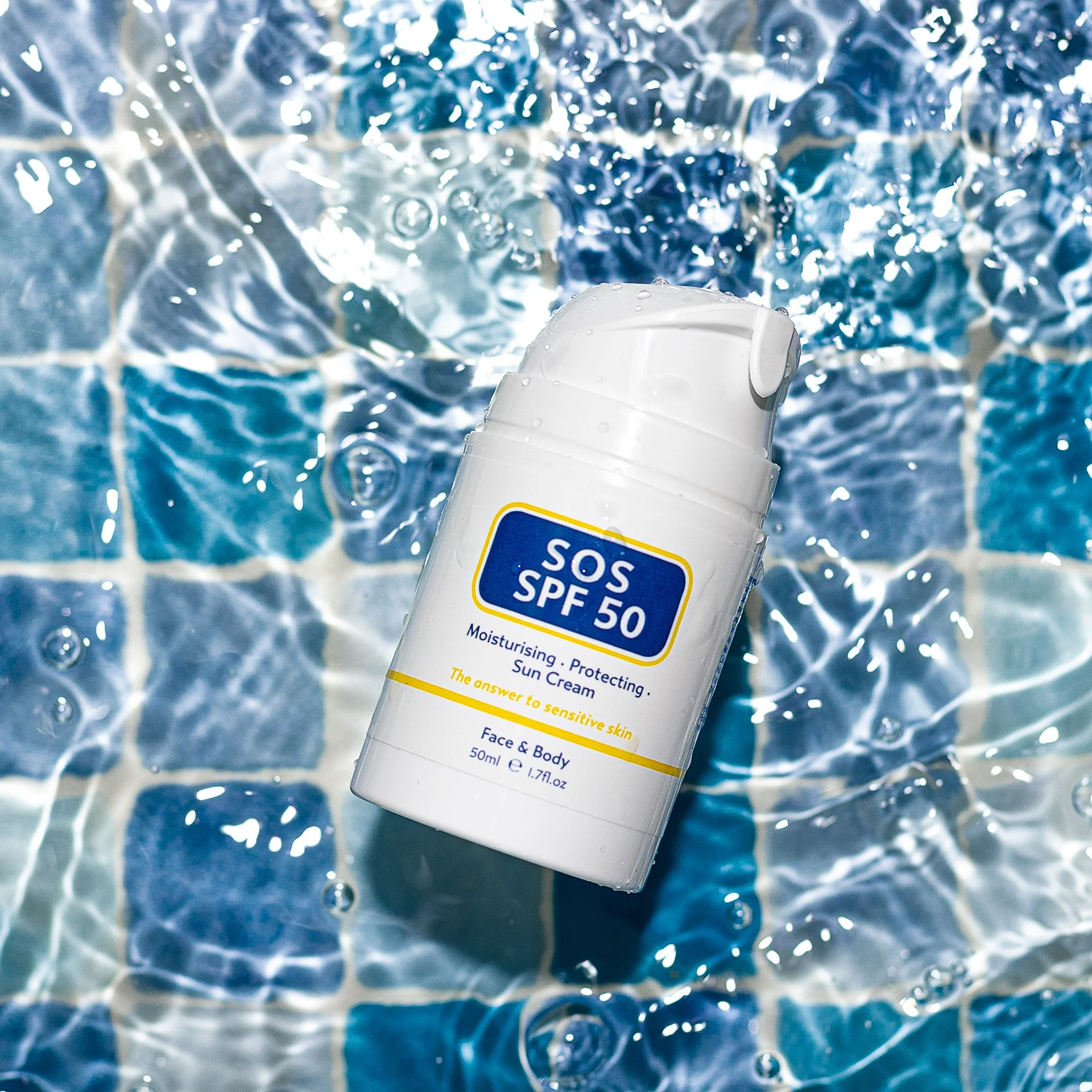
Apply a protective moisturiser such as SOS Night followed by a nourishing SPF such as the SOS SPF 50 Sun Cream before swimming to reduce moisture loss
Rinse skin immediately after leaving the pool.
Use gentle, sulfate / surfactant free cleansers like SOS Cleanse
Replenish with hydrating, anti-inflammatory ingredients such as ceramides, hyaluronic acid, panthenol, beta-glucan and glycerin, SOS Serum is great for this
Avoid retinol or exfoliating acids on pool-heavy days
"Think of chlorinated water like repeated low-level stripping of the skin. The more often you take a dip in the pool without restoring hydration and lipids, the duller, rougher and more sensitive skin can become.”
Pool Disinfectants & their Effect on Facial Skin
Pool disinfectants use different chemistries, but not all have an impact on your skin (pool face).
Disinfectant type:
Chlorine – the most common method. This chemistry can strip natural oils leading to dryness, irritation and can compromise the skin’s protective natural acid balance by changing the pH.
Bromine – an alternative but similar chemistry to chlorine. Slightly better and less aggressive for the skin but only slightly.
Ozone / UV light – physical treatment often used in combination. A lower perceived health problem but still a problem.
Salt Electrolysis – this system uses salt to generate chlorine. A little smoke and mirror chemistry with a more gentle and lower chlorine levels but its still chlorine with chlorination and oxidation issues.
Sea Water (Salt) – rich in minerals (magnesium and potassium) which can have anti-inflammatory properties but with a pH of 8 its alkaline and works against the natural acid mantle making skin prone to irritation.
How to protect your skin before Swimming:
Pool Face Protection (PFP) –
· Apply a good moisturiser SOS Night & double layer with a balanced SPF 50 Ultra Cream such as SOS SPF 50 Sun Cream.
· Use a gentle sulphate / surfactant free cleanser such as SOS Cleanse
Post swim – Cleanse & Replenish
1. Rinse as soon as you leave the pool with fresh clean water to remove all chemical or salt residue.
2. Cleanse gently – use a surfactant face cleanser to take away all impurities without stripping the skin.
3. Moisturise your face / skin whilst still damp – this helps lock in hydration.
4. For calming & soothing to give instant relief of irritation caused by chlorine or salt exposure use SOS H20 Day Cream SPF 30 and/or SOS Serum.
Using a simple pre & post swim routine will ensure a happy, irritation free holiday.
Note – never go without an SPF product.
Enjoy stress free swimming without stressing your skin. Have faith in your skincare products, have faith in SOS.